A century of progress
The concept of theranostics isn’t new. In 1921, Marie Curie
explored the use of radium in cancer treatment.4 In the
1940s, Dr. Saul Hertz developed the use of radioactive
iodine (I-131) to treat thyroid conditions. The FDA
approved this therapy in 1951, making it the first dual-purpose radiopharmaceutical: I-123 for
imaging and I-131
for treatment.4 Today, theranostics is becoming recognized
as the fifth pillar of cancer treatment, alongside surgery,
chemotherapy, radiation therapy and immunotherapy.3
Theranostics in prostate cancer
Theranostics is now making significant strides in prostate
cancer care. Advanced prostate cancers often express a
protein called prostate-specific membrane antigen (PSMA).
PSMA PET scans can detect these tumors. If positive,
patients may be eligible for Lutetium-177 vipivotide
tetraxetan, a targeted therapy that binds to PSMA and
delivers radiation to the cancer cells.
Monitoring results
After therapy:
- CT, MRI and bone scans evaluate response.
- SPECT scans performed shortly after a therapy dose
allow for assessment of therapy delivery and response.3
- Dosimetry calculates radiation absorbed by the body
and helps predict outcomes. It can be correlated with a
patient’s prostate-specific antigen level and to assess
therapy effectiveness.2
A promising future
Theranostics is growing rapidly. According to Sg2,
radiopharmaceutical therapy is projected to grow by 20%
over the next decade.5 This growth is fueled by:
- Earlier use in treatment pathways (e.g., prostate cancer)
- Expanded indications (e.g., renal cancer)
- Development of additional alpha-emitting
radiopharmaceuticals (e.g., Ac-225 and Pb-212)
- Increased use in combination with other therapies
Diagnostic growth
- PET is projected to grow 23% over the next 10 years5
- SPECT is projected to grow 8% over the next 10 years5
These modalities are essential for staging, treatment
planning and evaluating response. In many cases, they
provide clearer confirmation of drug delivery than
lab values.

Clinical trials and education
Clinical trial activity is increasing, opening more
opportunities for patients to access emerging therapies and for institutions to participate in
research.
Technologists and providers involved in trials can benefit
from the Society of Nuclear Medicine and Molecular
Imaging Clinical Trials Network Research Series, which
provides tools and training to support best practices.2
Tran HH, Yamaguchi A, Manning HC. Radiotheranostic landscape: a review of
clinical and preclinical development. Eur J Nucl Med Mol Imaging. Published
online Feb. 1, 2025. doi:10.1007/s00259-025-07103-7
FDA-approved radiopharmaceutical therapies
In the U.S., the following radiopharmaceutical
therapies are approved by the FDA:
- Iodine-131 for hyperthyroidism and
thyroid cancer
- Lutetium-177 dotatate for somatostatin
receptor-positive GEP-NETs
- Lutetium-177 vipivotide tetraxetan
for PSMA-positive metastatic
prostate cancer
- Yttrium-90 microspheres for
hepatocellular carcinoma
Many ongoing trials aim to expand these
therapies to other cancers, with the goal
of making treatment more precise and
less toxic.
Strategic considerations for health systems
As adoption grows, health systems will need to invest
in infrastructure, staffing and process improvements to
support theranostics effectively. Some common challenges
and potential solutions are listed below:

1. Expand imaging and treatment capacity
Access to PET/CT, PET/MRI and SPECT remain a limiting
factor. Imaging bottlenecks can delay treatment.
Action steps:
- Evaluate throughput and referral wait times
- Consider co-locating nuclear medicine and
oncology services
- Extend imaging hours to reduce backlogs
2. Plan for radiopharmaceutical supply chain
Theranostics adds complexity to the supply chain due to
short isotope half-lives, as well as a demand that exceeds
the current supply.
Action steps:
- Closely work with radiopharmacies to coordinate dose
orders and communicate regarding any changes
- Consider establishing relationships with both primary
and secondary radiopharmaceutical distributors for
increased supply assurance

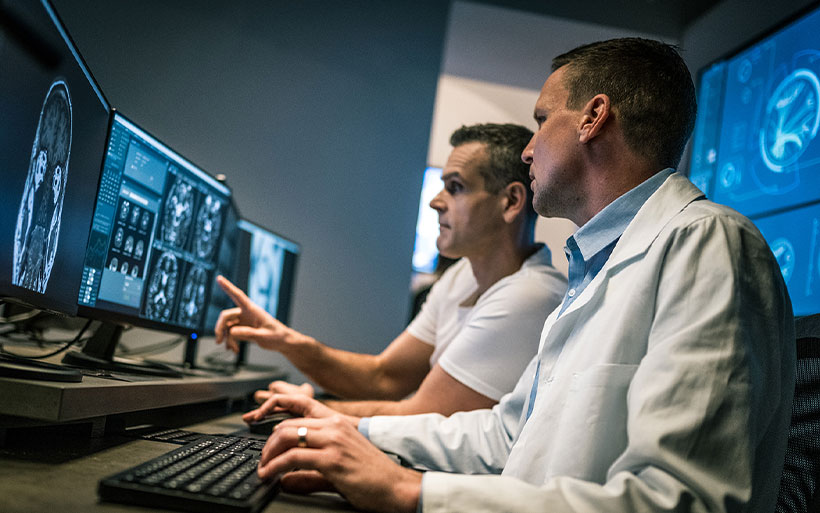
3. Build a skilled, collaborative workforce
Theranostics requires collaboration across disciplines.
Medical oncologists need familiarity with nuclear imaging
and radiopharmaceuticals. Nuclear medicine physicians
should understand cancer treatment pathways. There’s
also rising demand for nuclear medicine technologists,
dosimetrists, pharmacists, radiologists and radiation safety
officers to collaborate.
Action steps:
- Encourage cross-specialty collaboration through joint
case reviews and educational sessions
- Offer targeted training and continuing education in
theranostics
- Invest in onboarding programs that include both clinical
and operational perspectives
- Create career development pathways to retain and grow
talent in nuclear medicine and oncology
4. Streamline referral pathways
Fragmented referral processes can delay or prevent access
to therapy.
Action steps:
- Align urology, endocrinology, radiation oncology and
medical oncology around standardized criteria
- Map existing referral patterns to identify barriers or gaps
- Create shared workflows and clear triage protocols
- Promote coordination across specialties and expanded
sites of care
Best practice: Form a Theranostics Tumor Board to
improve patient selection and promote coordination across
specialties.
